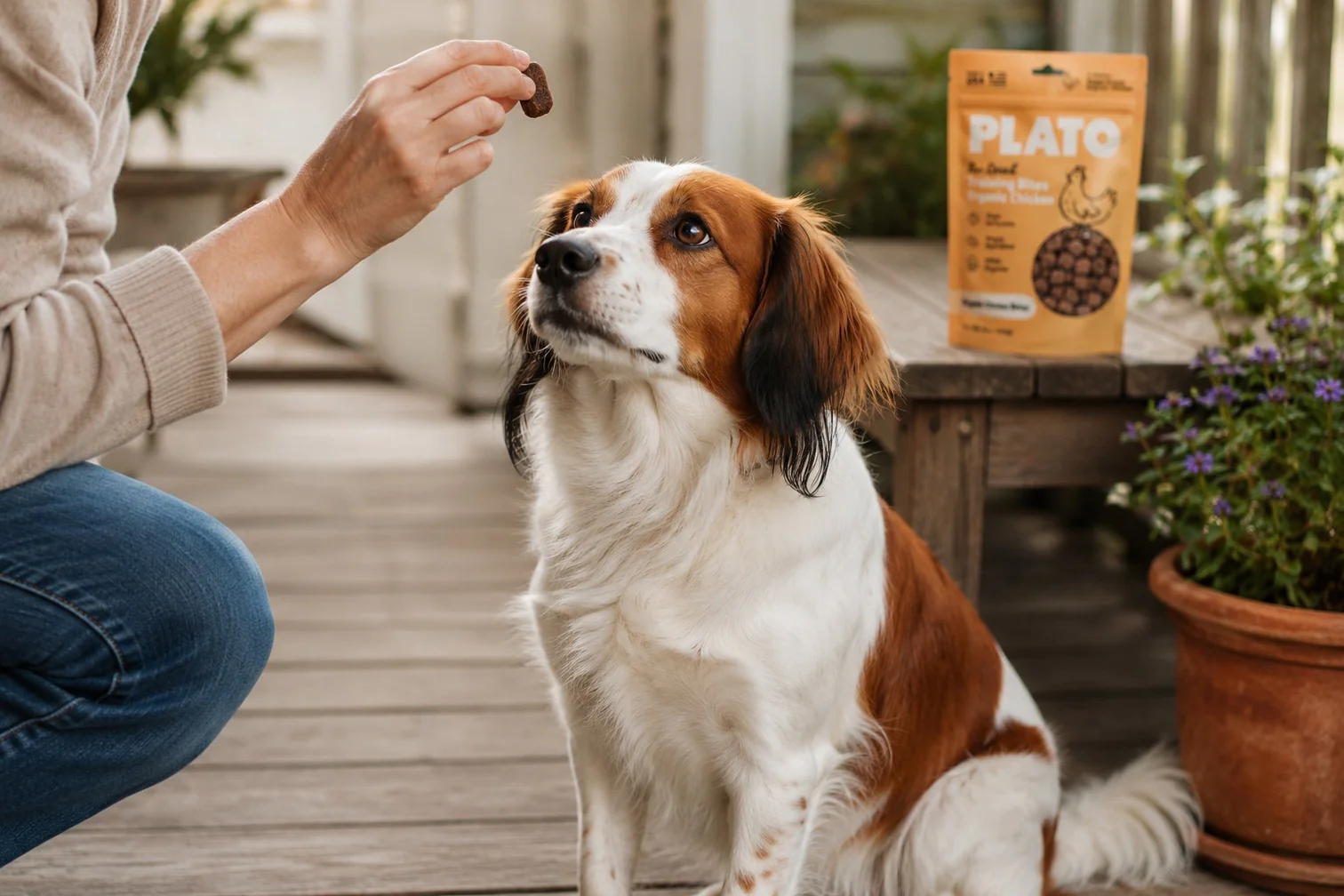
City walking is not a distance problem. It is a space problem. A dog that struggles on a narrow pavement at five o’clock is usually fine on the same street at seven in the morning, and the difference is not the dog.
Escape routes matter more than scenery
The single most useful feature of a walking route is somewhere to step aside. Wide pavements, park edges, car parks, side streets at regular intervals. A dog that has room to move away from an approaching trigger recovers in seconds. A dog trapped between a wall and traffic does not, and every repetition of that makes the next one worse.
Map your neighbourhood by width rather than by prettiness. You will find routes you have been ignoring.
Time of day beats route choice
The same route at 06:30 and 17:30 are two different walks. If your dog finds crowds difficult, moving the main walk by ninety minutes usually does more than any amount of training. This is not avoidance — it is arranging for your dog to succeed while you work on the harder version separately.
Sniffing is the point, not a delay
A twenty-minute walk where the dog is allowed to sniff properly is more satisfying to them than a forty-minute march. Scent is how dogs process the world, and stopping every time your dog stops is not indulgence — it is the actual content of the walk.
If you need to make progress, use a cue for it. Loose lead means sniff freely; a heel cue means we are covering ground now. Dogs learn the distinction quickly.
Surfaces
Pavement in summer is the one people forget. If you cannot hold the back of your hand against it for seven seconds, it will burn pads. Walk on grass, walk early, or do not walk. In winter, the same surfaces are salted, and that needs a rinse afterwards.
Kit that earns its place in a city
A well-fitted harness rather than a collar for anything that pulls. A short lead in traffic and a longer one where there is space — a five-metre line in a quiet park changes a walk entirely. A light for the dark half of the year. Waste bags in more than one pocket, because one is never enough.
Build one good loop
Most people over-value variety. One route your dog knows well, walked calmly, is worth more than five that produce a stressed dog. Add variety once the baseline is solid.